


Eclampsia in Children

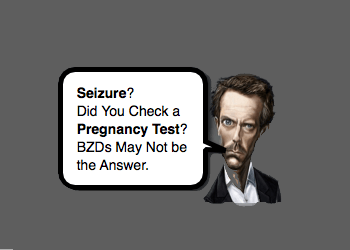 Managing seizures in children is an imperative skill for us all to have. Whether the seizure is Simple Febrile or Complex, we need to be facile in its management and aftercare. Additionally, some of the special circumstances must be considered (ex, Neonatal Seizures, Pyridoxine Deficiency) as well as contemplation of the potential Seizure Mimics. With this in mind, there is another condition, that is deserves attention. While it may seem like more of an “adult” problem, it actually is critically important we keep this on our radar for pediatric patients also (plus, there are so many “adult” problems that need to be considered in kids – Cholelithiasis, Renal Stones, Pulmonary Embolism). Let’s take a minute to review Eclampsia!
Eclampsia: Basics
- Eclampsia is a leading cause of maternal death worldwide.
- Pre-eclampsia / eclampsia occurs after the 20th week of gestation.
- Eclampsia may occur in postpartum period also. [Al-Safi, 2011; Cantey, 2007]
- Late/Delayed onset postpartum eclampsia = eclampsia >48 hours after delivery
- Seldom develop the classic pre-eclamptic symptoms. [Cantey, 2007]
- Can be challenging to diagnose and requires more vigilance.
- Be wary of complaints of headache in postpartum period.
- Think of Cerebral Venous Thrombosis or postpartum eclampsia!
- Pre-eclampsia is characterized by:
- Hypertension
- SBP >140 and/or DBP >90
- Unfortunately, these levels may not be seen in younger patients, leading to missed diagnosis. [Olaya-Garay, 2017]
- Comparison to baseline blood pressures may be more helpful in children. [Olaya-Garay, 2017]
- Proteinuria
- Generalized edema
- Hypertension
- Eclampsia can be preceded by: [Scribano, 1996]
- Neurologic Symptoms: (commonly precede eclampsia [Cooray, 2011])
- Headaches
- Visual disturbances (ex, blurred vision, blindness, scotomata)
- “Eclampsia” is derived from “eklampsis”: Greek, meaning “to shine forth.” [Elliott, 1989]
- Refers to the flashes of light that patients may describe.
- Epigastric pain
- Hyperreflexia
- Increasing blood pressures
- Neurologic Symptoms: (commonly precede eclampsia [Cooray, 2011])
- Eclampsia is diagnosed when pre-eclampsia is complicated by cerebral dysfunction: [Elliott, 1989]
- Impaired mental status
- Focal neurologic signs
- Seizures
- Coma
- Eclampsia complications
- Pulmonary edema
- Cerebral hemorrhage
- Cerebral hypoxia and edema
- Abruptio placentae
- Acute renal failure
- Hepatic rupture
- Circulatory collapse
- Fetal and/or maternal death
Eclampsia: Risk Factors
- Maternal age
- The extremes of the age range are at highest risk.
- Adolescent age is one of the most important risk factors. [Olaya-Garay, 2017]
- Chronic hypertension
- Gestational diabetes
- Obesity
- Family history of pre-eclampsia/eclampsia
- Nulliparity as well as Multiple gestations
- Urinary tract infection
- Hydatidiform mole
- Fetal hydrops
Eclampsia: Treatment
- ABCDs are always first!
- Check the Sugar! (just in case you forgot to check it during ABCDextrose)
- Anticonvulsants: [ACOG]
- Magnesium Sulfate: 4–6 grams IV bolus over 20 minutes then 1-2 grams/hr infusion
- Benzodiazepines may also be needed for recurrent seizure activity.
- Keppra can be used as second line medication.
- Antihypertensives:[ACOG]
- Labetalol
- Hydralazine
- Delivery of the fetus
- This is the primary treatment for eclampsia.
- Delivery should be the next goal once the mother is more stable. [Elliott, 1989]
Moral of the Morsel
- Seizures in children are common, but don’t get complacent. Think about the causes!
- Few labs are actually useful when managing a seizure. Glucose, Sodium, and Pregnancy Test all potentially change management!
- Consider pediatric pregnancies as a high risk condition.
- Be wary of the postpartum patient with a headache! Scrutinize the blood pressure.
References
Olaya-Garay SX1, Velásquez-Trujillo PA2, Vigil-De Gracia P3. Blood pressure in adolescent patients with pre-eclampsia and eclampsia. Int J Gynaecol Obstet. 2017 Sep;138(3):335-339. PMID: 28602034. [PubMed] [Read by QxMD]
Ananth CV1, Keyes KM, Wapner RJ. Pre-eclampsia rates in the United States, 1980-2010: age-period-cohort analysis. BMJ. 2013 Nov 7;347:f6564. PMID: 24201165. [PubMed] [Read by QxMD]
Fong A1, Chau CT, Pan D, Ogunyemi DA. Clinical morbidities, trends, and demographics of eclampsia: a population-based study. Am J Obstet Gynecol. 2013 Sep;209(3):229. PMID: 23727516. [PubMed] [Read by QxMD]
Cooray SD1, Edmonds SM, Tong S, Samarasekera SP, Whitehead CL. Characterization of symptoms immediately preceding eclampsia. Obstet Gynecol. 2011 Nov;118(5):995-9. PMID: 22015866. [PubMed] [Read by QxMD]
Al-Safi Z1, Imudia AN, Filetti LC, Hobson DT, Bahado-Singh RO, Awonuga AO. Delayed postpartum preeclampsia and eclampsia: demographics, clinical course, and complications. Obstet Gynecol. 2011 Nov;118(5):1102-7. PMID: 21979459. [PubMed] [Read by QxMD]
Cantey JB1, Tecklenburg FW, Titus MO. Late postpartum eclampsia in adolescents. Pediatr Emerg Care. 2007 Jun;23(6):401-3. PMID: 17572526. [PubMed] [Read by QxMD]
Scribano PV1, Selbst SM. Severe eclampsia in an adolescent: a case report and review of the literature. Pediatr Emerg Care. 1996 Dec;12(6):425-7. PMID: 8989791. [PubMed] [Read by QxMD]
Elliott D1, Haller JS. Eclampsia: a pediatric neurologic problem. J Child Neurol. 1989 Jan;4(1):55-60. PMID: 2918212. [PubMed] [Read by QxMD]
Author

